


Cash Handling Checklist for New Retail Stores Essential Tools You Can’t Skip
Introduction
Opening a new retail store is an exciting start to an entrepreneurial journey, but it involves countless details that can determine early success or failure. Cash handling, for example, is a crucial yet often overlooked aspect. Even in an era of digital payments, cash remains an indispensable part of retail transactions. For new store owners, limited profit margins mean that any cash-related losses are possible—whether due to human error, counterfeit money, or inefficient processes—potentially threatening the business’s survival.
A robust cash management system is not superfluous, but essential. It not only safeguards your revenue but also streamlines operations, reduces employee stress, and ensures financial transparency. Building a complete system hinges on two core elements: choosing the right cash handling equipment and implementing standardized operating procedures. This article will detail essential tools, step-by-step workflows, and practical tips to help new retailers establish a secure and efficient cash handling system. It will also answer some frequently asked questions to alleviate your concerns.
Core Cash Handling Tools: The Foundation of Accuracy
Bill Counters

Manually counting cash is time-consuming, error-prone, and severely impacts employee productivity, especially during peak hours. A high-quality bill counter, through an automated counting process, can quickly and accurately complete the counting in seconds, eliminating these pain points.
For stores that need to handle multiple denominations of banknotes, a mixed denomination CIS money counter is a convenient solution. Equipped with advanced currency image sensor (CIS) technology, it can count different denominations of banknotes simultaneously and automatically calculate the total amount. This not only improves checkout efficiency but also reduces losses due to counting errors, making it ideal for busy convenience stores, boutiques, and supermarkets.
Counterfeit Detectors
Counterfeit money poses a hidden threat to newly opened retail stores. Accepting just one counterfeit $100 bill can wipe out a day’s profits. A professional counterfeit detector is your first line of defense; it can scan for hidden security features invisible to the naked eye, such as magnetic stripes and infrared markings on genuine bills.
To further enhance protection, you can use a UV detector. This compact and easy-to-use tool uses ultraviolet light to illuminate genuine bills, revealing fluorescent watermarks and security threads. This allows cashiers to quickly verify the authenticity of large denomination bills at checkout, avoiding disruption to the customer’s shopping process. Using these two devices together creates double security, effectively preventing losses caused by counterfeit money.
Coin Counter & Sorter
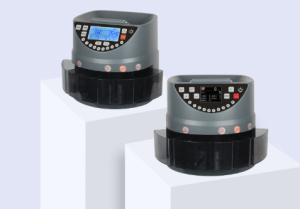
Coins are an unavoidable part of retail cash handling, but manual counting and sorting are both tedious and inefficient. A coin counter and sorter solves this problem by automatically counting, sorting, and organizing coin denominations, reducing a 30-minute task to just 2 minutes.
This tool is especially useful for stores with high volumes of small transactions, such as cafes, gift shops, and convenience stores. It ensures accurate change, streamlines daily checkout processes, and reduces the hassle of employees rummaging through piles of change, freeing up time to focus on customer service.
Money Binding Machine
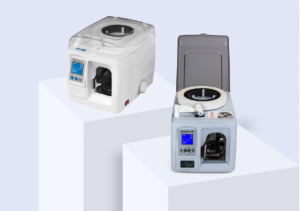
After cash is counted and verified, it needs to be organized for storage. A money binding machine can securely bundle the counted banknotes into tight, tamper-proof bundles, making them easy to store in a safe or transport to the bank.
This small yet essential tool improves the cash handling process. Bundled cash is less likely to be lost or stolen, and the neat and orderly arrangement of banknotes simplifies the bank deposit process, saving time for employees and bank tellers. For new stores, a compact semi-automatic banknote bundling machine is a cost-effective investment that enhances the professionalism of cash management processes.
Operational Processes: Maximize Tool Effectiveness & Accountability
Even the best cash handling equipment cannot function properly without standardized processes. Clear workflows ensure that tools are used correctly, responsibilities are clearly assigned, and cash-related risks are minimized.
Standardize Cash Counting & Reconciliation Workflows
Establish a consistent cash handling procedure across all shifts: At the start of each shift, use a bill counter to verify the initial cash balance; during transactions, verify all banknotes of $20 and above using a counterfeit detector and a UV detector; at the end of the shift, count the cash using a mixed denomination CIS money counter and coin counter and sorter, and then reconcile the total amount with the POS system record. Any discrepancies discovered during the counting should be immediately documented and investigated to ensure transparency.
Staff Training
The effectiveness of the equipment depends on the staff’s ability to use it. All employees must undergo training before starting work, learning how to properly operate counterfeit detector, UV detector, and other tools. Training content includes how to identify suspicious banknotes, follow secure cash handling procedures, and reconcile accounts. Regular refresher training (every 3-4 months) helps reinforce good habits and reduce errors.
Secure Cash Storage & Deposit Protocols
Limit the amount of cash stored in cash registers and deposit any excess cash in a locked, fireproof safe throughout the day. Use a money binding machine to neatly bundle banknotes before storing or depositing them in a bank. Establish a fixed deposit schedule (e.g., daily deposits for high-traffic stores, every other day for smaller stores) and use tamper-proof bank bags for transportation. Having two employees accompany cash deposits adds an extra layer of security.
Final Cash Handling Checklist for New Retail Stores
Ensure your store has all the necessary tools and processes according to this checklist:
A reliable bill counter or mixed denomination CIS money counter
Counterfeit detector and UV detector to prevent counterfeit money
Coin counter and sorter for efficient coin management
Money binding machine for organizing cash bundles
Standardized cash counting and verification processes
Comprehensive employee training on cash handling equipment
Secure storage space (secure, lockable cash drawers) and a fixed deposit process
Chuanwei Banknote Counting Machine: A Good Choice for You
When choosing cash handling equipment for your new retail store, reliability, accuracy, and versatility are paramount. Chuanwei meets all these requirements. Trusted by over 20 years of industry experience, Chuanwei has become synonymous with high-performance cash automation solutions, with products tailored for retail, banking, and small businesses.
Chuanwei‘s bill counter line covers a wide range of store types: the comprehensive mixed denomination CIS money counter uses advanced image recognition technology to count multiple denominations of banknotes at once; while the compact top loading bill counter features a space-saving, user-friendly design, ideal for busy checkout counters. All models support multi-currency recognition and multi-layer anti-counterfeiting detection, seamlessly integrating with your existing counterfeit detector and UV detector workflows.
Key features such as printing counting results and detailed counting reports simplify the daily settlement process, transforming tedious cash management into an efficient and convenient workflow. Whether you operate a small boutique or a large convenience store, Chuanwei‘s machines can help you eliminate manual counting errors and save your employees several hours of work time each week.
With a professional R&D team and global distributor support, Chuanwei is not only an equipment supplier but also a long-term partner for your retail business’s cash management success.
Conclusion
Cash handling is a crucial element of success in the retail industry. For new stores, investing in high-quality cash handling equipment and establishing clear operating procedures are essential. From the bill counter that speed up counting to the money binding machine that ensure deposit security, each tool plays a vital role in protecting revenue, reducing errors, and streamlining operations.
By choosing reliable equipment, providing appropriate training to employees, and following standardized workflows, you can build a smooth, secure, efficient, and effective cash management system. This allows you to focus on what matters most: serving customers, developing your brand, and making your new retail store a long-term successful business.
FAQs
Q1: Do small retail stores really need professional cash handling equipment?
A1: Yes. Even small stores can benefit from tools like banknote counters and counterfeit money detectors. These devices can reduce costly errors, save employee time, and prevent losses from counterfeit money. All of these are crucial for stores with low profit margins.
Q2: How often should employees receive training on cash handling tools?
A2: Initial training should be completed before employees begin their shifts. Short refresher courses are recommended every 3-4 months to ensure proper use of UV detectors, coin counters, sorting machines, and other equipment.
Q3: Can a CIS banknote counter with mixed denominations handle different currencies?
A3: Most models support major currencies (such as USD, EUR, GBP), but be sure to check its compatibility with your local currency before purchasing.
Q4: Does a new store need a cash bundling machine?
A4: While not mandatory, a cash bundling machine can improve cash management, reduce the risk of theft, and streamline bank deposit processes. For most new stores, this is a worthwhile investment.
Q5: How to extend the lifespan of cash handling equipment?
A5: Keep the equipment clean (avoid dust buildup), operate according to the user manual, and conduct regular inspections to ensure the banknote detector and counter are functioning properly. Most equipment requires almost no maintenance beyond basic cleaning.

